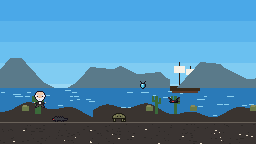
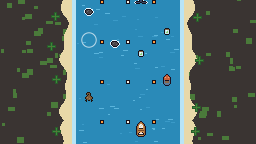
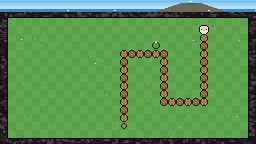
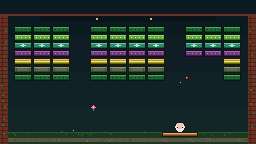
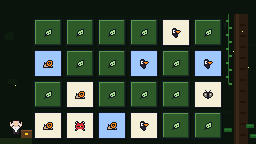
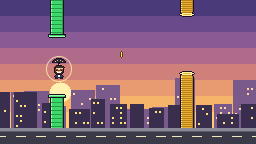
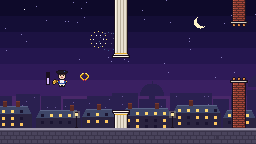
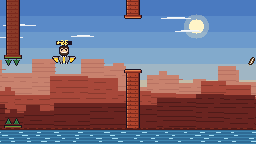
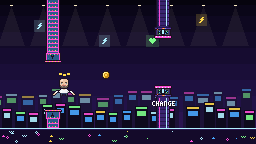
The survey ship is anchored in the bay for one last afternoon, and pixel Charles Darwin has spent it on the highest cliff of the island, sketching everything in sight. Then a gust of sea wind snatches his field notebook, flips it open and scatters the pages across the sky: finch beaks, tortoise shells, cactus flowers and weeks of careful drawings, all drifting towards the open sea. Climbing down would take far too long. Luckily, a big frigatebird that has been watching him all week, its red throat puffed up with curiosity, lands right beside him and lowers one long black wing. The rescue known as Frigatebird Flight is about to take off.
Pixel Darwin settles on the bird's back, holds on to its neck and off they go. Every flap lifts them a little, and the island fills the rest of the sky: dark basalt sea cliffs streaked white by nesting seabirds, prickly-pear cactus trees taller than a house and, further along, black lava spires still glowing from a sleepy volcano. The loose pages flutter in the gaps between them. Each one caught is another observation saved for the long voyage home, and the ship sails at sunset. How many can they gather before the bird needs a rest?